
Style History
Clothing sizes began as a manufacturing convenience and never became more
The numbers on labels were invented so that garments could be made before anyone had ordered them, and every attempt to standardise them since has been voluntary.
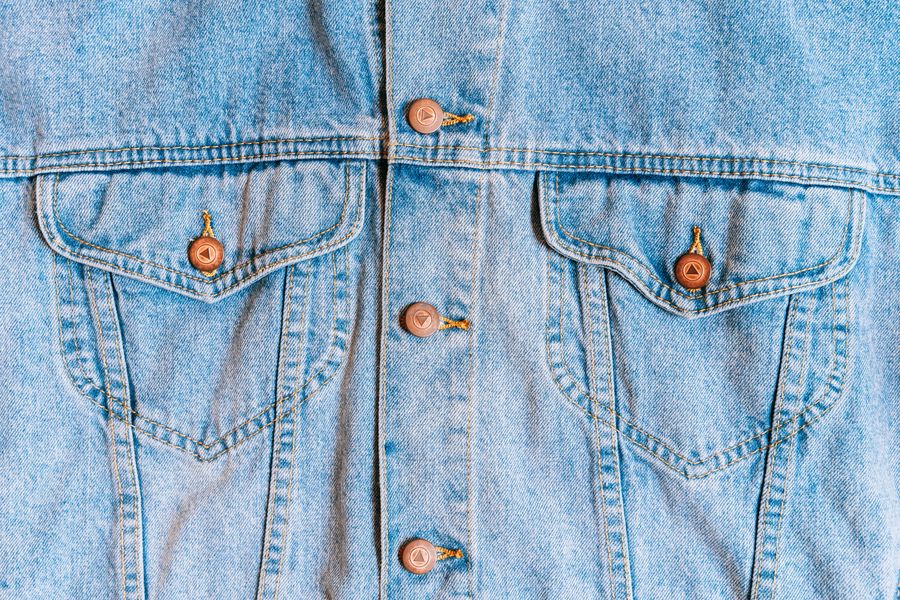
Before sizes there were only measurements
For most of the history of clothing there was no such thing as a size. A garment was made for a specific person, cut to their measurements by somebody who had taken them, or it was made at home. Secondhand clothing circulated heavily, and it was altered to fit whoever bought it next.
The concept of a size only becomes necessary when garments are made in advance of a customer existing. That requires a manufacturer to guess what bodies will turn up, and to produce a range of guesses in fixed increments.
So sizing is not a description of human bodies. It is a sampling scheme for a production run, and it inherits all the compromises of one.
Uniforms produced the first usable data
The pressure to make clothing in advance came first from armies and navies, which needed to clothe large numbers of men quickly and could not wait for individual tailoring. Producing garments for stock meant knowing how the measurements of a population were distributed.
Military supply generated exactly that information, because recruits were measured on enlistment and the records accumulated. Chest measurement turned out to correlate usefully with other dimensions in adult men, which meant a single number could carry a lot of the fitting decision.
That is why men's tailoring sizing still runs on chest and neck measurements in centimetres or inches, and why it remains comparatively legible. It is descended from a system built on a real measured population, and it still names an actual dimension.
Women's sizing had no equivalent foundation
Women's ready-to-wear expanded rapidly without a comparable body of measurement data behind it. Early sizing borrowed the logic of children's clothing, which was numbered by age, and then borrowed bust measurement, and neither carried enough information about a shape that varies in more independent ways.
Attempts were made to fix this. Large measurement surveys were conducted in the twentieth century, and voluntary commercial standards were published on the back of them in several countries. They were voluntary, and the industry used them loosely or not at all.
In the United States the national standard was eventually withdrawn, leaving sizing to manufacturers and to voluntary industry specifications. Nothing replaced it with any force, which is why an arbitrary number on a label became the norm and stayed there.
Why the numbers drift downward
Because nothing anchors a size label to a measurement, the label can move. Over decades, the body measurements associated with a given number in women's clothing have generally grown, so the same physical garment carries a smaller number than it once did.
The commercial logic is not mysterious. A customer who fits into a smaller number feels better about the purchase, and there is no penalty for a manufacturer who shifts, because there is no standard to breach. Once one moves, others follow or lose comparison.
The effect compounds quietly and it is one reason vintage garments confuse people who go by numbers. A label from decades ago and a label today can describe quite different garments, and neither is lying, because neither number ever meant anything fixed.
Three systems that do not convert cleanly
The regional systems developed separately and encode different things. Some name a body measurement directly. Some use an arbitrary even-numbered scale. Some use a scale derived from a different measurement entirely, and the conversion charts that claim to map between them are approximations at best.
Grading adds another layer. A manufacturer picks a base size, fits it properly, and then scales the pattern up and down by fixed increments. Bodies do not scale that way — proportions change as people get larger or smaller — so garments at the ends of a size range typically fit worse than those in the middle.
Vanity sizing, regional divergence and grading together mean that a size is a fact about one manufacturer's pattern block, and nothing more general than that.
What to do with a system that means nothing
The practical response is to stop treating the number as information and to use measurements instead. Finished garment measurements — the actual dimensions of the item laid flat — are the only figures that transfer between makers, countries and decades.
Many sellers publish them, and where they do not, a garment that already fits can supply the same numbers. This is not a workaround for a broken system so much as a return to how clothing was fitted before sizes were invented.
It is also worth noting how recent all of this is. The idea that a person has a size, and that the size is a property of them rather than of a garment, is younger than most of the clothes it applies to, and it was never designed to carry the weight it now has.
Common questions
Why do I take three different sizes in three shops?
Because each manufacturer fits its own base pattern and grades from it, and no rule requires any of them to agree. The label describes that maker's block rather than your body. Comparing published flat measurements is the only reliable way across brands.
Is vanity sizing real?
The drift is well documented: the body measurements associated with a given women's size number have generally increased over the decades, so the same number now denotes a larger garment. Whether every individual instance is deliberate flattery or simply accumulated drift is harder to establish.
Why is menswear sizing more consistent?
Because much of it still names an actual measurement — chest, neck, waist, inside leg — inherited from tailoring and from military supply, rather than an arbitrary number. It is not perfectly consistent, since ease and cut vary, but at least the label refers to something physical.
Nikhil has written about fit, fabric, care & repair for most of the last decade and is happiest when a piece answers the question completely.