
Wardrobe
A wardrobe drifts because you replace one garment at a time
Clothes are bought singly and worn as sets, and that mismatch is why a wardrobe assembled from consistently sensible purchases slowly stops working.
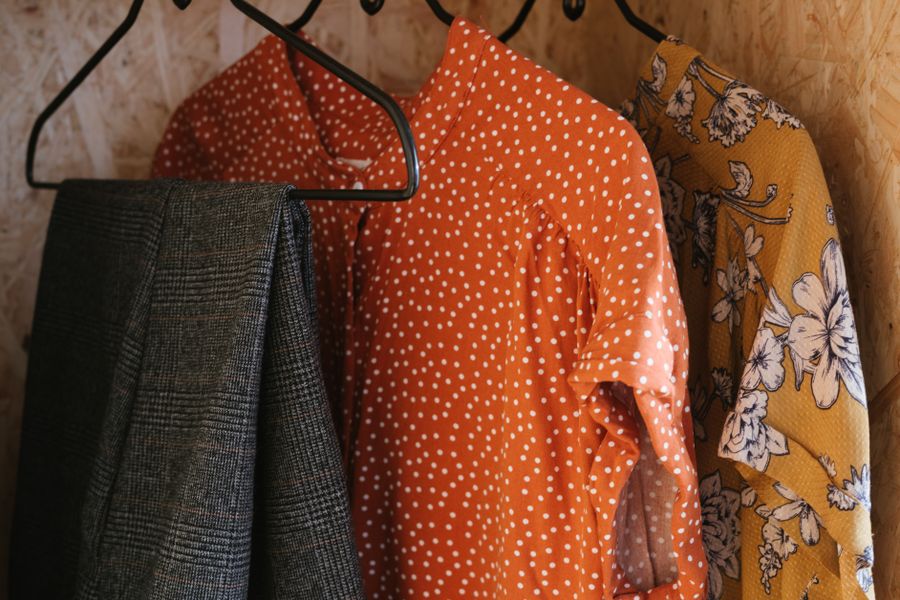
Bought singly, worn in sets
Almost nobody buys a wardrobe. People buy a garment, then months later another, each time replacing something that wore out or filling a gap that had opened. Every one of those decisions can be reasonable and the result can still fail, because the thing being used is not the garment but the combination.
The mechanism is simple enough to state. A new item is chosen against what is available now and against what the shops are currently offering, not against a set of garments bought over the previous decade. Over enough purchases, the set stops being consistent even though no individual choice was wrong.
This is drift, and it is worth naming, because it feels like a taste problem or a self-discipline problem when it is really a structural one.
Proportions move slowly and constantly
The dimensions of everyday clothing shift gradually and it is very hard to see while it is happening. Trouser rises rise and fall over years. Lapels widen and narrow. Shoulders move in and out. Jacket lengths change. Shoe toes get rounder and squarer.
Because the change is slow, a garment bought several years apart from another can differ noticeably in proportion while both look unremarkable on their own. Worn together, the difference shows, and it usually reads as one item being older rather than as the pair being mismatched.
Fabric weight participates too. The general weight of ready-made cloth has trended lighter over a long period, so an older jacket often has more substance and hangs differently from a newer one, which affects how they look next to each other more than the colour does.
The two-of-a-kind problem
Some items are bought in sets and then wear out at different rates, which is where drift does the most visible damage. Suit trousers wear out substantially faster than the jacket, because they take friction from sitting and from the legs rubbing while walking, and the jacket mostly hangs.
The result is a jacket in good condition and trousers that are shiny at the seat, and no replacement trouser will match, because the cloth was woven in a particular batch and dyed in a particular lot. This is the entire reason the trade has long recommended buying a spare pair of trousers with a suit — the two pairs then age at half the rate each and both match the jacket.
The same logic covers anything that only works as a pair. If a combination is important to you, the time to secure the second half is while the first is still in production, not when the first has failed.
Replacing before failure rather than after
Waiting for a garment to wear out entirely before replacing it guarantees that the replacement is bought under pressure, from whatever happens to be available that week, and in a hurry. Purchases made that way are the ones most likely to drift or to become orphans.
The alternative is to notice which garments are load-bearing — the ones appearing in most of your actual outfits — and to treat their eventual failure as predictable rather than surprising. Those are the items to replace early, while you still have the working original to compare against.
Buying two of something that works is the blunt version of the same idea, and for basics that are worn constantly and wear out predictably it is a rational move rather than an indulgent one. It also removes the annual search for a replacement that no longer exists.
Re-anchoring rather than starting over
When a wardrobe has drifted, the instinct is to clear it out and rebuild, which is expensive and usually produces a new set that will drift in the same way. The cheaper correction is to identify the small group of garments that still work together and treat those as the anchor, then bring the outliers back towards them one at a time.
Alterations do real work here. A trouser leg tapered, a jacket shortened slightly, a shirt taken in through the body — these are modest sums that pull older garments into line with newer proportions, and they are far cheaper than replacement.
And some drift should simply be accepted. Bodies change, lives change, and a wardrobe that still perfectly suits the person you were eight years ago would be a strange thing to aim at. The goal is a set of clothes that works together now, not one frozen at the moment it was assembled.
Common questions
How do I tell drift from a garment simply being old?
Try it on with the things you wear most. If it looks dated on its own but sits comfortably with the rest of the wardrobe, it is fine. If it looks perfectly good alone and awkward next to everything else, that is drift, and it is often correctable with an alteration rather than a replacement.
Is buying two identical garments wasteful?
For something you wear weekly and that wears out predictably, it is usually the opposite. You get a matched pair that ages at half the rate each, you avoid a rushed replacement search, and you keep a working reference for what fitted. It is a poor idea for anything worn occasionally.
Should I keep clothes that no longer fit?
A small number, for a limited period, if a change in size is recent and likely to reverse. Beyond that they occupy space, complicate every morning and quietly make the wardrobe feel worse than it is. Storing them out of the way rather than on the daily rail is a reasonable middle course.
Tara has written about fit, fabric, care & repair for most of the last decade and prefers a plain explanation to a clever one.