
Wardrobe
Layering works when the layers have different jobs
Three garments worn together outperform one thick one for reasons that are physical rather than aesthetic, but only if each layer is doing something the others are not.
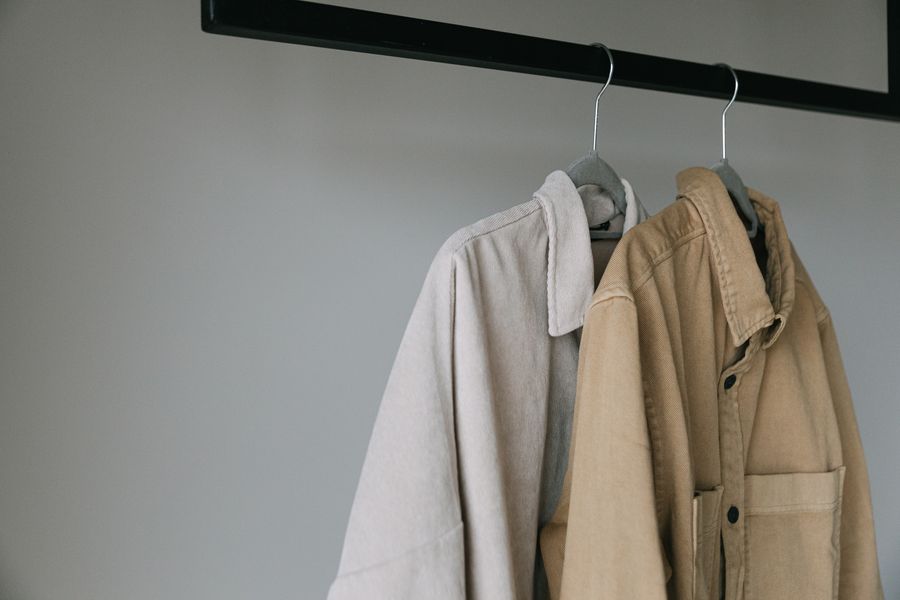
Air is doing the insulating
A garment does not warm you. It slows the rate at which you lose heat to the surroundings, and it does that mainly by trapping still air, which conducts heat poorly. The fibres are largely a scaffold for holding air in place, which is why a lofty light garment can outperform a dense heavy one.
That is the whole reason multiple thin layers beat one thick garment of the same total weight. Each interface between garments traps its own layer of air, so three layers give you several insulating pockets rather than one.
It also explains why compressing insulation defeats it. A tightly buttoned coat over three jumpers squashes the air out of all of them, and a tight boot over thick socks makes a foot colder rather than warmer. Room is part of the mechanism, not slack in the system.
Three jobs, three layers
The outdoor clothing trade divides layers by function, and the division is useful indoors too. The layer next to the skin manages moisture, moving perspiration away from the body so it does not sit there conducting heat. The middle layer insulates. The outer layer handles wind and rain.
Those are genuinely different requirements and no single fabric excels at all three. A wind-resistant outer shell is by definition tightly constructed, which means it holds little air and insulates poorly. A lofty insulating fabric is open and lets wind straight through.
The failure most people run into is duplication. Wearing three insulating layers with nothing to block wind gives you bulk without much benefit on a windy day, since moving air strips heat out of open fabric quickly. One thin windproof layer over a single jumper often outperforms it.
Wind and damp are what the outer layer is for
Still air only stays still if something holds it. Wind pushes it out of open fabric and replaces it continuously, which is why a knitted jumper that feels warm indoors feels thin on an exposed street. A closely woven outer layer stops that exchange, and the effect is out of all proportion to the layer's own thickness.
Moisture works in the other direction. Water conducts heat far better than air does, so a damp insulating layer has lost much of its function, whether the water came from rain or from the wearer. This is the reason the inner layer is described as a moisture-management layer rather than as a warm one.
The old advice against cotton next to the skin in cold conditions comes from exactly here. Cotton absorbs a lot of water, holds it against the body and dries slowly, which is unremarkable indoors and a genuine problem when you are cold and wet outside. It is a legitimate concern rather than a marketing claim, though it is often stated more absolutely than the conditions warrant.
Where tailoring and bulk collide
The clothing constraint that outdoor advice tends to ignore is that garments are cut to a shape. A jacket has a fixed armhole and a fixed chest, and adding a thick layer underneath does not simply fill space — it changes the geometry the jacket was drafted for.
This is why the armhole is the first place layering fails. Bulk in the armpit reduces the arm movement a set-in sleeve allows, so a jacket that moved perfectly over a shirt binds over a heavy jumper. Coats intended to go over tailoring are cut with a wider chest and a lower, roomier armhole for precisely this reason.
Order matters too, and not only for warmth. Layers should get progressively looser outwards, because a tight garment over a loose one compresses it, distorts it and wears it. It is a small thing that decides whether layering looks constructed or looks like everything went on in whatever order it came to hand.
Building a wardrobe that layers
The practical version is to own fewer very warm garments and more moderately warm ones, since a heavy garment is one item that works in a narrow temperature band while two thinner ones cover several. It also raises the combination rate, because a mid-weight jumper goes with more things than a bulky one does.
Buy the outer layer to fit over the rest. Try a coat on over what you will actually wear beneath it rather than over a shirt in a warm shop, and check that you can reach forward and cross your arms. A coat that fits beautifully over nothing is a coat for a mild day.
And be honest about your climate. In a mild damp winter the wind and rain layer is doing most of the work and heavy insulation is rarely needed; in a cold dry one the reverse holds. Layering advice written for one of those situations transfers badly to the other, which is why so much of it seems either excessive or inadequate depending on where you happen to read it.
Common questions
Is a heavy coat ever better than layers?
Yes, when conditions are stable and cold and you are not moving much, since a single well-made coat is simpler, less bulky at the armhole and does not need managing. Layers win where conditions or your activity level change through the day, because layers can be removed and a coat can only be unbuttoned.
Why do I get cold after being warm outdoors?
Usually because you worked up moisture while active and then stopped. Damp fabric against the skin conducts heat away far faster than dry fabric, so the insulation that was adequate while you were generating heat is not adequate once you are still. It is the main argument for a base layer that moves moisture rather than holding it.
Do I need technical fabrics for everyday layering?
For walking to work in a city, no. Wool knitwear and a closely woven jacket cover the same three functions perfectly well and look better doing it. Technical layering earns its keep when you are far from shelter, working hard, or exposed for long periods, which is a different problem from a cold commute.
Tara has written about fit, fabric, care & repair for most of the last decade and prefers a plain explanation to a clever one.