
Wardrobe
Formality is a scale and most outfits fail by straddling two points on it
Every garment sits somewhere on a continuum from workwear to evening dress, and the ones that look wrong together are usually ones separated by too much of that distance.
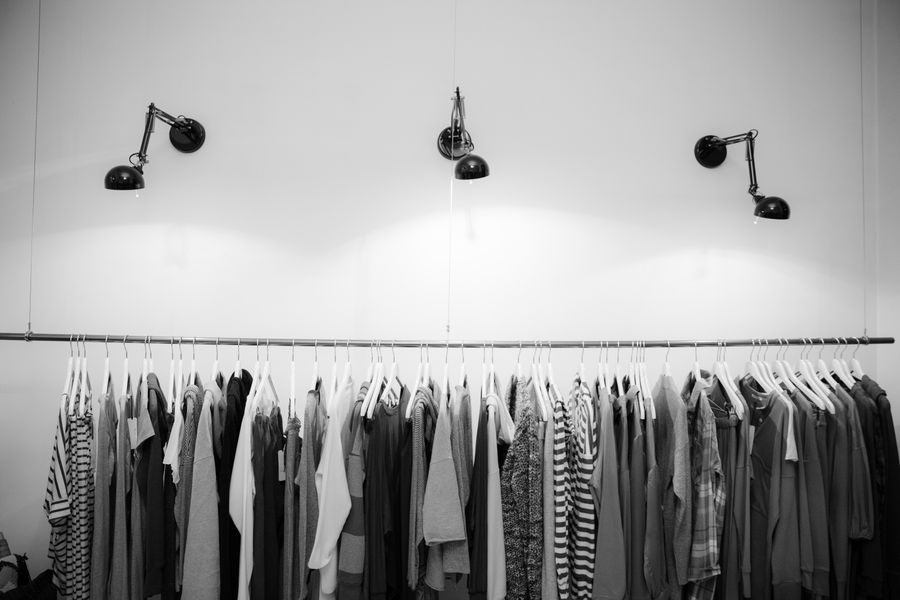
The continuum nobody writes down
Clothing arranges itself along a scale of formality that almost everyone recognises and almost nobody states explicitly. At one end sits work clothing built for hard use; at the other, garments made for the most formal occasions a culture still observes. Everything else falls somewhere between.
The scale is not a set of boxes. It is continuous, and the useful skill is judging roughly where a given garment sits rather than which category it belongs to. A blazer and a work jacket are both jackets, and they are a long way apart.
What produces a mismatched outfit is usually distance on this scale rather than any specific rule being broken. Two garments a step apart look fine together, and often better than two that match exactly. Two garments four steps apart look like an accident.
What actually raises or lowers a garment
Several properties move a garment along the scale, and they work together. Smoothness is one: a fine, flat, closely woven cloth reads as more formal than a rough, textured or slubby one, which is why a worsted suit and a tweed jacket sit at different points despite both being wool.
Shine is another, in both directions. A slight sheen on a fine cloth raises formality; heavy visible surface texture lowers it. Colour depth matters too, with darker and more uniform colours reading as more formal than faded or mottled ones — which is exactly why washed denim and raw denim are not interchangeable.
Then there is construction. Visible hardware, patch pockets, exposed stitching, rivets and heavy topstitching all descend from clothing built for work, where a detail had to be strong and reachable rather than discreet, and they carry that association into any garment they appear on. Concealed fastenings, welt pockets, clean finished edges and a full lining pull the other way, because each of them costs labour and each of them hides the mechanics of how the garment was put together.
The failures are predictable
The commonest mismatch pairs a formal upper with a distinctly casual lower, or the reverse. A structured, sharply finished jacket over heavy work trousers reads as two outfits sharing a body, because the jacket announces one context and the trousers another.
Shoes are where it shows first and most reliably, since footwear is strongly coded and the eye checks it early. A heavy work boot under a fine trouser, or a sleek dress shoe under rugged clothing, produces the same effect in either direction.
The other classic failure is a single formal item wearing everything else down with it. A garment noticeably above the rest of the outfit does not raise the outfit; it exposes the rest by comparison. This is why an expensive item bought in isolation so often disappoints when it goes on.
Bridging deliberately
Combinations across the scale can work, and some of the most durable ways of dressing rely on it — a tailored jacket over denim is a well-established bridge that has held for decades. What makes it succeed is that the bridge is built rather than accidental.
The mechanics of building one are worth stating. Move the formal item down: a soft, unstructured jacket in a textured cloth with patch pockets is much closer to denim than a sharply structured one in fine worsted. Move the casual item up: a dark, clean, well-fitting jean is closer to tailoring than a faded and distressed one.
And use the intermediate pieces to fill the gap. Knitwear, chinos, suede shoes and unlined outerwear all sit comfortably in the middle of the scale, and an outfit that includes them has fewer visible jumps than one built from the two extremes alone.
Why it matters more than any individual rule
A great deal of clothing advice consists of specific prohibitions, most of which are local conventions with a limited shelf life. Formality distance explains more of the same ground and it survives the conventions changing, because it is about relationships between garments rather than about the garments themselves.
It also transfers across contexts and cultures. Whatever the local vocabulary, most dress systems distinguish between clothing for work, clothing for ordinary public life and clothing for ceremony, and the distance principle applies inside each of them.
One qualification, said plainly. There are people who deliberately combine widely separated registers and do it well, and the results can be more interesting than anything a distance rule produces. The principle is a good default and a poor law. Knowing where a garment sits is what makes departing from it a choice rather than a mistake.
Common questions
Can I wear trainers with tailored trousers?
It is a wide gap, so it depends entirely on how far each item is moved towards the other. A clean, plain, low-profile shoe with a soft unstructured trouser closes most of the distance; a bulky sports shoe under a sharp suit trouser does not. Convention on this has shifted considerably and continues to, which is itself a reason not to treat any answer as settled.
Where do jeans sit on the scale?
It depends on the jean, which is why the question causes so much confusion. A dark, plain, clean, well-fitting jean sits in the middle of the scale and combines widely. A faded, distressed, heavily detailed one sits near the workwear end and combines only with things nearby.
Does an expensive garment automatically read as formal?
No. Price and formality are separate axes and expensive casual clothing is abundant. A costly knitted garment in a textured yarn is still casual, and treating cost as a proxy for formality is a reliable route to an outfit that does not hang together.
Amrita has been reporting on fit, fabric, care & repair since long before it was fashionable and reads the small print so you do not have to.