
Wardrobe
Resale value is changing what gets made and how it is built
A large second-hand market gives garments a life beyond the first owner, and that prospect quietly alters purchasing, construction and even labelling upstream.
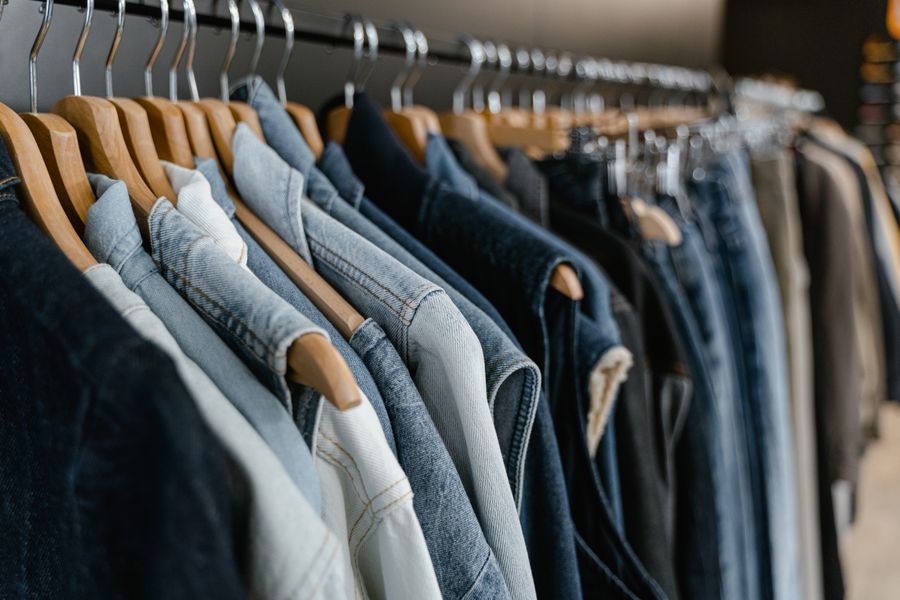
A second market changes the first one
When garments can be resold reliably, the effective cost of owning one falls, because part of the purchase price is recoverable. That is the same mechanism that operates in cars and in housing, and it produces the same behaviour: buyers become more willing to spend on items that hold value and less willing to spend on ones that do not.
The consequence upstream is that resale becomes a factor in what people buy new. A garment perceived as retaining value carries an argument that a similar garment without that reputation does not, even when the two are functionally identical.
This is not universal and it is not evenly distributed. Resale operates strongly on recognisable items and on categories where condition can be assessed at a distance. It operates weakly on plain basics, on underwear and on anything where the second-hand price is below the cost of listing and posting it.
What actually holds value
The garments that resell well tend to share concrete properties rather than abstract ones. They are made in a construction that survives use, so a ten-year-old example still exists in wearable condition. They are recognisable, so a buyer can identify what they are looking at. And they are stable in design, so an old one does not read as obviously dated.
That last property is doing more work than people credit. A design that has been made largely unchanged for decades has a second-hand market by definition, since supply and demand both persist. A design specific to one season has neither once the season passes.
Condition dominates everything else in pricing, and the parts that determine condition are the ones that cannot be repaired cheaply: the shape of a shoulder, the state of a knit surface, the soundness of a leather sole. Which is a useful thing to know in both directions.
The effect on how things are built
Where resale matters, there is a commercial reason to build for it, and some of that shows up in construction choices. Stitched rather than glued soles, replaceable components, generous seam allowances and repair services all make a garment more likely to still exist and be sellable years later.
There is a countervailing pressure that is worth naming honestly. A thriving second-hand market competes with new sales, and it is not obviously in a maker’s interest for its output to circulate for decades at falling prices. The response has often been to participate in resale directly rather than to resist it.
The net effect on construction is real but modest, and mostly confined to categories where durability was already part of the proposition. It has done much less to change how the cheapest end of the market is built, where garments are not made to survive a first owner, let alone a second.
What it changes for a buyer
The practical shift is that cost per wear stops being the whole calculation. A garment bought at a given price, worn for several years and then sold has an effective cost of the difference between the two prices, which can be dramatically lower than the sticker suggested.
That argues for buying at the durable end of whatever your budget allows, and for keeping garments in condition, since condition is what the recovery depends on. It also argues for buying second hand yourself, where the first owner has already absorbed the steepest part of the depreciation.
The caution is that resale value is a forecast, not a fact. Categories fall out of favour, condition deteriorates faster than expected, and the time spent listing and posting a garment has a value of its own. Treating recoverable value as certain is how people talk themselves into purchases they would otherwise question.
The wider picture is genuinely mixed
A second-hand market extends the working life of garments, which is unambiguously good for the resources embedded in them. Every additional year a garment is worn spreads its manufacturing footprint across more use, and that is the single most effective thing anyone does with clothing.
The complication is that easy resale can also increase consumption rather than reducing it, since knowing an item can be moved on lowers the perceived cost of acquiring it. Whether the net effect is fewer garments made or more is genuinely disputed, and the honest answer depends on behaviour that is difficult to observe.
What is not disputed is that a garment worn by three people over fifteen years is better used than three garments worn by one person each. Whatever the aggregate effect, the individual case is clear enough to act on.
Common questions
Which garments hold their value best?
Broadly, outerwear, footwear with repairable construction, and long-running designs that have not changed much. What they have in common is that they survive use in identifiable condition and that a buyer knows what they are getting. Fine knitwear and anything close-fitting tend to hold value poorly because condition degrades visibly.
Is buying second hand always cheaper in real terms?
Usually, though not always once repairs and alterations are counted. A used garment needing resoling, a new lining and a fitting can cost more in total than a new one at the lower end. The saving is real on items that are sound and merely used, and thin on items that need work.
Does selling old clothes actually reduce waste?
It extends the life of the specific garment, which is a genuine gain. Whether it reduces overall consumption is less clear, since easy resale also makes buying feel less consequential. The reliable version of the benefit is on the buying side: purchasing second hand displaces a new garment directly.
Nikhil writes about fit, fabric, care & repair, mostly the parts other people skip and is unreasonably interested in the detail nobody else checks.