
Wardrobe
What a garment costs to make is not most of what it costs to buy
The price on the label is assembled from a chain of decisions in which materials and sewing are only the first two, which is why price alone predicts quality so poorly.
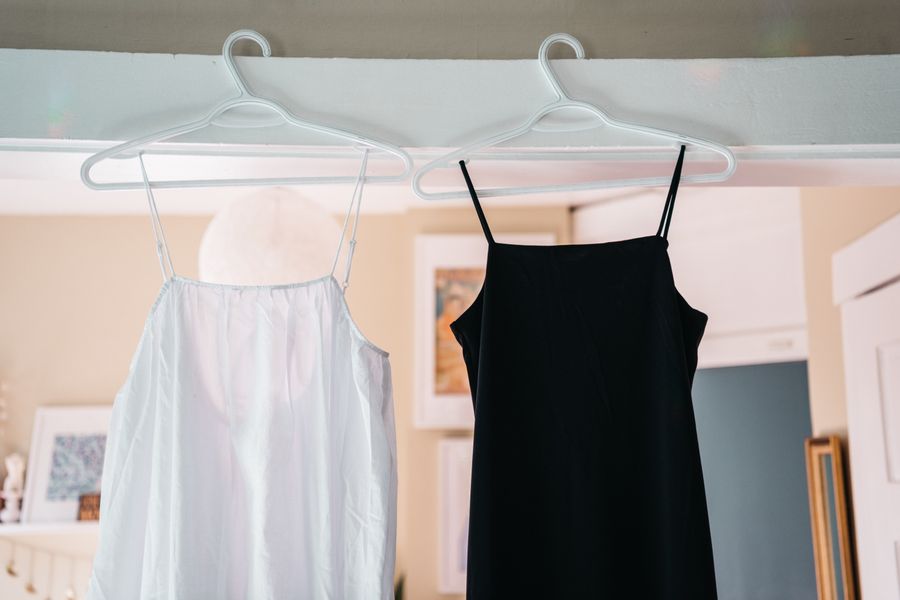
The price is a stack, not a figure
Every garment carries a cost of goods: the cloth, the trims, the thread, the labels, the labour to cut and sew it, and the overheads of the factory. Onto that are stacked freight, duties, warehousing, the wholesale or retail margin, marketing, the cost of shops or of the returns that online selling generates, and the discounting that a proportion of the range will eventually need.
No honest single ratio describes how those stack up, because it differs enormously between a garment sold directly from a workshop and one that passes through several intermediaries before reaching a shelf. What is consistent is the direction: the making is a minority of the price, sometimes a small one.
That isn’t by itself an accusation. Shops, staff, design, sampling, unsold stock and returns are all real costs. But it does mean that paying twice as much rarely buys twice as much garment, and occasionally buys none at all.
Cloth is the input most easily reduced
Fabric is usually the largest single element of the making cost, and it can be cut in ways that are almost invisible at the point of sale. A lighter weight of the same cloth costs less, feels similar new, and wears out sooner. A shorter-staple cotton spun into the same yarn count looks identical and pills faster.
The other fabric economy is the quantity used. Narrower seam allowances, shallower hems, tighter pattern layouts and slightly less ease all save cloth across a production run, and every one of them reduces what can later be altered and how the garment hangs.
None of this is detectable from a composition label, which will read identically for cloths of quite different quality. It is detectable by hand, by weight, and by turning the garment inside out to see what has been left inside it.
Labour is measured in minutes, and details cost minutes
A factory prices a garment partly by how many minutes of machine time it takes. Every enclosed seam, every bar tack, every matched stripe, every hand-finished detail and every extra component adds minutes, and minutes multiplied across a run become one of the largest numbers in the calculation.
This is why construction is where cost hides most reliably. A lining that has been cut with proper slack, a canvas that has been sewn rather than fused, a pattern that has been matched across a seam: these are labour decisions and they are the ones with the clearest relationship to how the garment ages.
It also explains an otherwise odd fact about mid-priced clothing. Two garments at the same price can differ substantially in construction, because one has spent its budget on cloth and the other on making, and neither choice is wrong.
Where the rest of the money goes
Marketing and brand-building are real expenditures that make the same physical garment cost more, and buying into them is a legitimate choice as long as it’s a conscious one. Retail space costs money, staff cost money, and the convenience of trying something on before buying it is a service with a price.
Online selling substitutes a different set of costs. Returns are expensive to process, and in categories where fit is uncertain a large proportion of what is shipped comes back, all of which is priced into what everyone pays. The free return isn’t free; it is distributed.
And a share of every price covers the items that will never sell at full price. A range planned with markdowns in mind is priced to survive them, which is part of why sale prices can be sustainable and why the original figure was never quite a claim about value.
Judging value without knowing any of the numbers
Since the breakdown is invisible, the only reliable approach is to assess the object. Weigh the cloth in your hand, look at the density of the weave against the light, turn it inside out and look at the seam finishes, the allowances and the reinforcement, and check whether patterns match at the seams.
Then think about the parts that cannot be changed later. Cloth quality, construction and the fundamental cut are fixed; hems, waists and sleeve lengths are not. Money spent on the fixed parts is money that keeps working, and money spent on a garment with a poor cut buys a permanent problem.
The blunt conclusion is that price is a weak signal in both directions. Cheap garments are sometimes well made and expensive ones are sometimes not, and the only way to tell is to look at the thing itself, which takes about a minute and almost nobody does.
Common questions
Do higher prices at least mean better working conditions?
Not reliably. Price reflects positioning, materials, construction and distribution as much as anything about labour, and expensive garments are made in the same regions and often the same facilities as cheaper ones. Certifications and published supplier information are more informative than price, and even they have limits.
Why are some garments so much cheaper than seems possible?
A combination of very large production runs, the cheapest available cloth, minimal construction, low margins on high volume, and selling direct without the intermediate stages. Each of those is a real economy. The result is a garment that functions and that is not built to be repaired or to last many seasons.
Is cost per wear a good way to judge value?
It is a useful corrective to comparing prices directly, since a garment worn weekly for years is cheap regardless of what it cost. It breaks down when it is used to justify a purchase in advance, because the number of wears is a prediction rather than a fact, and predictions about clothing are habitually optimistic.
Nikhil writes about fit, fabric, care & repair, mostly the parts other people skip and is unreasonably interested in the detail nobody else checks.