
Fabric
A blend inherits the worst of each fibre as readily as the best
Mixing two fibres in one yarn is done for cost as often as for performance, and the resulting cloth does not average its parents so much as take some traits from each.
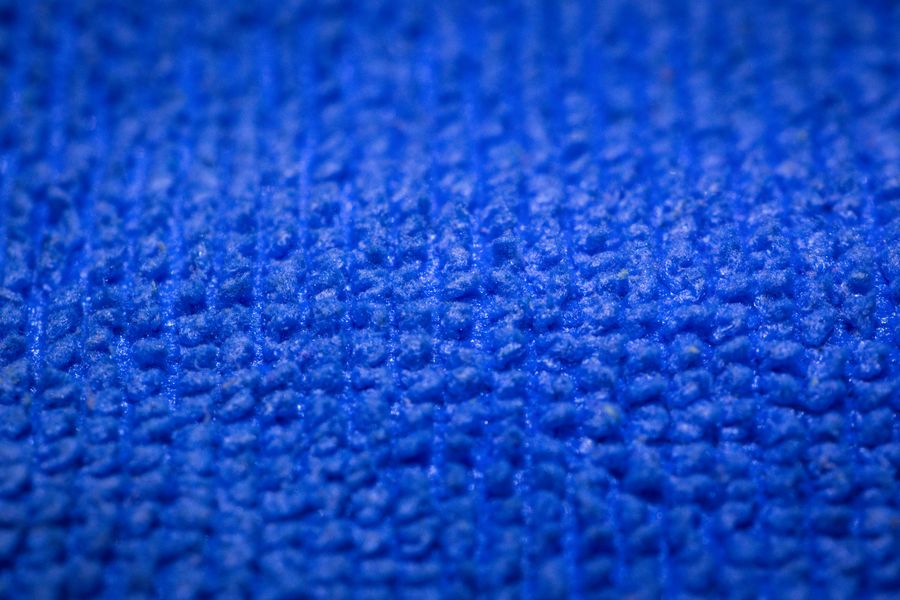
What a blend physically is
There are two quite different things a label can mean by a blend. In an intimate blend, fibres of two types are mixed before spinning, so every individual yarn contains both and they are distributed through the cloth evenly. In a combination fabric, whole yarns of one fibre are woven or knitted together with whole yarns of another, so the two remain separate strands within the structure.
The distinction matters because the two behave differently. An intimate blend cannot separate; the properties are locked together in every yarn. A combination fabric can shrink unevenly, dye unevenly and abrade unevenly, because it is genuinely two materials sitting side by side rather than one hybrid.
A composition label tells you the percentages by weight and nothing about which arrangement was used. You can often see it by pulling a thread from a seam allowance and looking at whether the yarn itself is mixed or whether adjacent yarns differ.
Why fibres get blended in the first place
The honest answer, most of the time, is cost. Adding a cheaper fibre to an expensive one lowers the price per metre of cloth while allowing the label to name the expensive one first. That is not automatically deceptive, but it is a commercial motive dressed up as a technical one often enough to be worth naming.
The genuine technical reasons are real too. Polyester added to cotton raises tensile strength and abrasion resistance, resists creasing and reduces shrinkage, all of which a cotton shirt genuinely benefits from. A small percentage of elastane adds recovery to a cloth that has none. Nylon in a wool sock adds abrasion resistance exactly where wool is weakest.
There is also a processing motive. Some fibres are difficult to spin alone — very fine or very short ones especially — and blending with a longer, stronger fibre makes an otherwise unworkable material into a usable yarn.
Properties do not average, they compete
The intuitive model of a blend is that fifty per cent of one fibre and fifty per cent of the other gives you a cloth halfway between them. That is wrong in a useful way, because different properties are determined by different mechanisms and each mechanism responds to the mixture differently.
Strength tends to be dominated by the stronger fibre, since it takes the load first. Comfort against skin is dominated by whichever fibre sits at the surface of the yarn, which depends on spinning rather than on percentage. Moisture behaviour is dominated by the absorbent fibre at low percentages and by the non-absorbent one at high ones, because water has to travel through the whole structure.
This is why a small addition can transform a cloth while a large one merely dilutes it. Two per cent elastane changes how a fabric moves entirely. Two per cent cotton in polyester changes nothing you could feel.
Blends age unevenly, and that is their real weakness
A single-fibre cloth wears out as one thing. A blend contains components with different lifespans, and the shortest one sets the point at which the garment starts looking tired even though the rest of it is sound.
The clearest case is elastane, which loses its recovery to heat, chlorine and body oils long before the cotton or polyester around it is worn. The garment does not tear. It just stops holding its shape, and there is no repair for that. Something similar happens with wool and nylon socks, where the wool felts and abrades while the nylon frame is still perfectly intact.
Dyeing compounds this. Different fibres need different dye chemistries, so a blend is usually dyed in more than one stage, and the two colourations fade at different rates. That is the mechanism behind the flat, slightly grey look that old polyester-cotton shirts acquire.
Reading a composition label properly
Percentages are given by weight, which is not the same as by volume or by surface area. A light fibre at twenty per cent by weight can occupy considerably more of the cloth than that number suggests, and it is surface presence rather than mass that determines what your skin feels.
It is also worth remembering that composition is only one of several variables, and rarely the dominant one. Yarn structure, weave, weight and finish all sit between the fibre and the finished cloth, and a well-made polyester and a badly made wool are not remotely comparable simply because of their labels.
The most useful habit is to read the percentage against the purpose. Elastane in the low single figures on trousers is functional. Elastane at ten per cent in a woven shirt is a comfort decision with a known expiry date. Small percentages of an expensive fibre named prominently are usually marketing, since a few per cent of anything cannot change how a cloth behaves.
Common questions
Is a blend always worse than a pure fibre?
No, and the assumption trips people up. Nylon in a wool sock, polyester in workwear cotton and a trace of elastane in a fitted trouser all solve real problems that the pure fibre cannot. The suspicion is better aimed at blends where the added fibre does nothing except lower the cost.
Why do blended garments pill so much?
Because pilling requires two things: fibre ends working loose, and enough strength in those fibres to keep the resulting ball attached. Cotton pills shed themselves because the fibres are weak enough to break. Add polyester and the balls stay anchored by strong synthetic fibres, so the pills accumulate instead of falling off.
Can a blended fabric be recycled?
Not easily, which is one of the strongest arguments against blending. Recycling processes are built around a single polymer or a single natural fibre, and separating an intimate blend means dissolving one component chemically. Single-fibre garments are far more likely to have a route onwards.
Nikhil has written about fit, fabric, care & repair for most of the last decade and is happiest when a piece answers the question completely.