
Fabric
Cotton, linen and viscose are all cellulose and behave nothing alike
Three fabrics made from the same chemical substance differ so completely in strength, creasing and drape that the shared chemistry turns out to explain almost nothing.
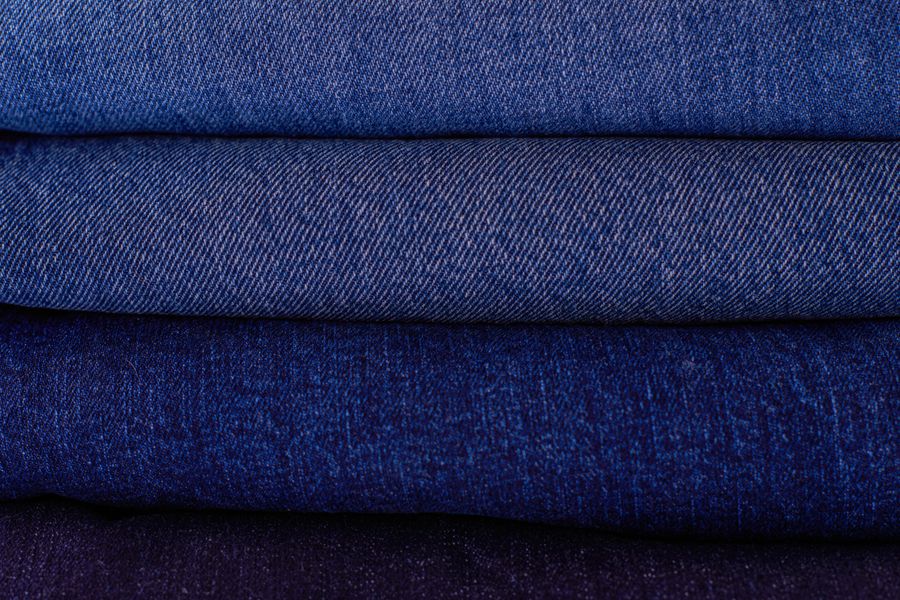
Same substance, three different objects
Cotton, linen, viscose, modal, lyocell and cupro are all cellulose. Chemically they are the same material that makes up the cell walls of plants. If chemistry decided how fabrics behaved, they would all behave alike, and anyone who has worn them knows that they do not.
What differs is physical form: the length and shape of the fibres, how the cellulose molecules are arranged within them, and how tidily those molecules line up along the fibre axis. That arrangement is what governs strength, stretch, absorbency and how a crease forms and stays.
It is a useful case study in a wider point. Fibre names on a label describe origin more than performance, and two fabrics can share a name and share very little else.
Cotton is a short twisted hair
A cotton fibre is a single seed hair, a collapsed tube that dries into a flat ribbon with a natural twist along its length. It is short — a few centimetres at most, and the difference between ordinary and long-staple cotton is a matter of millimetres that nonetheless changes everything about the yarn spun from it.
The twist is why cotton spins well: the fibres grip one another and hold together in a yarn without any adhesive. It is also why the surface of cotton cloth is slightly hairy, because fibre ends stick out, and it is why cotton pills a little and softens with washing as those ends move.
Cotton absorbs water readily and, unusually, is slightly stronger wet than dry, which is why it tolerates hard laundering that would destroy more delicate cloth. What it lacks is elasticity. Bend a cotton fibre sharply and it stays bent, so cotton creases easily and the creases stay until it is wetted or pressed.
Linen is a long stiff bundle
Linen comes from the stem of the flax plant rather than from a seed, and it is a bast fibre: long bundles of cells cemented together, running much of the length of the stalk. The cellulose in it is more highly ordered and more closely aligned than in cotton, and the fibre is correspondingly stronger and considerably stiffer.
Stiffness explains the creasing that linen is famous for. A fibre with almost no elastic recovery, formed into a fabric with thick, irregular yarns, folds sharply and holds the fold. This is not a fault in the cloth and no finish removes it entirely. It is the direct price of the properties people want linen for.
Those properties are worth naming. Linen conducts heat away from the skin better than cotton does, its stiffness keeps the cloth standing slightly off the body rather than clinging, and it is exceptionally strong and long-lived. It also softens steadily with use as the cemented bundles break down into finer elements, which is why old linen feels quite unlike new.
Viscose is cellulose that has been dissolved and rebuilt
Viscose starts as wood pulp or another cellulose source, which is chemically dissolved into a thick liquid and then extruded through fine holes and regenerated as filament. The chemistry survives the process. The fibre architecture does not: what emerges is a smooth, largely uniform filament without the twist of cotton or the bundled structure of flax.
That smoothness is why viscose drapes so beautifully and takes dye so deeply. It hangs in fluid folds that neither cotton nor linen can imitate, which is exactly why it is used where movement and shine are wanted.
The cost is wet strength. Water penetrates the loosely ordered structure and viscose loses a large part of its strength when saturated, which is why viscose garments distort, shrink or tear in a machine wash and why so many carry a dry-clean instruction. Lyocell, made by dissolving cellulose in a different solvent that produces a more ordered fibre, is markedly stronger wet, and it is a reasonable illustration that the weakness is a consequence of process rather than of cellulose itself.
Choosing between them
For something that will be washed constantly and handled roughly, cotton is the sensible default, because it survives laundering and its main weakness — creasing — is cosmetic and reversible. For heat, linen earns its reputation, provided you have made peace with the way it looks after an hour of sitting down.
For drape, viscose and its relatives do something the natural fibres cannot, and the sensible approach is to treat them as delicate rather than to be disappointed later. Wash cool, do not wring, dry flat, and expect a shorter life.
Blends muddy all of this, usually deliberately. A little polyester in a cotton shirt reduces creasing and increases abrasion resistance while making the cloth less absorbent and less comfortable in heat. That is a genuine trade with something on both sides, and reading it as an adulteration of the cotton misses what the blend was for.
Common questions
Why is linen so expensive if flax is easy to grow?
Growing flax is not the hard part. Extracting the fibre involves retting, breaking and combing the stalks, and the process is slow, exacting and less mechanised than cotton harvesting. Long fibres also have to be handled carefully to stay long. The cost is in processing, not in the plant.
Is viscose a natural or a synthetic fibre?
Neither term fits cleanly, which is why the trade calls it regenerated or man-made cellulosic. The raw material is a natural polymer from plants; the fibre itself is manufactured through a chemical process that dissolves and reforms it. It is best understood as a natural material rebuilt into a new physical form.
Does linen really get softer, or does it just wear out?
Both, and they are related. Washing and use gradually break down the substances cementing the fibre bundles together, so the cloth becomes finer and more flexible while remaining strong. Eventually abrasion does wear it through, but well-made linen commonly reaches its softest state long before it approaches that point.
Lukas joined to cover fit, fabric, care & repair and stayed for the awkward questions and reads the small print so you do not have to.