
Fabric
Three basic weaves account for nearly everything you own
Plain, twill and satin are the only ways of interlacing yarn in common use, and the choice between them explains drape, durability, creasing and shine before fibre gets a say.
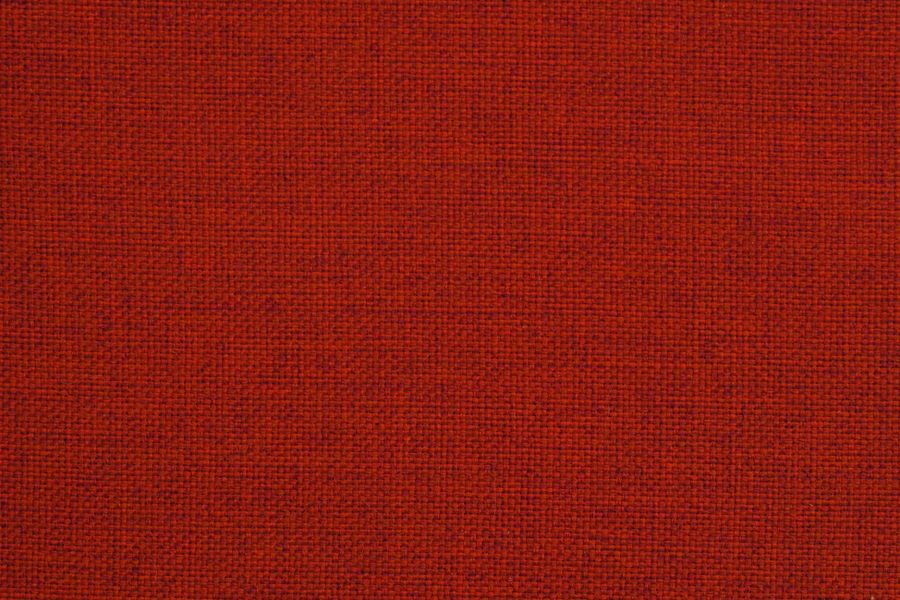
One decision, repeated
Weaving is the interlacing of two sets of yarn at right angles: the warp running the length of the cloth and the weft crossing it. At every crossing there is a single decision — does the weft go over the warp thread or under it. Repeat that decision in a pattern and you have a weave structure.
Almost all cloth in ordinary use is built from three of those patterns or from variations on them. Plain, twill and satin are not styles or qualities. They are geometries, and each produces predictable behaviour regardless of what fibre is running through it.
This is why fibre content on a label explains less than people expect. The same cotton yarn woven three ways gives three fabrics that behave nothing alike.
Plain weave is the most interlaced and the most stable
In a plain weave the weft goes over one warp thread and under the next, alternating every time. It is the simplest possible arrangement and it produces the maximum number of interlacings for a given number of threads.
Lots of interlacings means lots of friction between yarns, so the cloth is stable, holds its shape and resists yarns sliding out of place. It is also the flattest and least drapey structure, because each yarn is held in position by its neighbours and cannot move freely.
The trade is creasing and abrasion. Every crossing is a point where the yarn bends sharply, which makes the surface hard-wearing in one sense and prone to holding a crease in another. Poplin, muslin, canvas, taffeta and most shirting are plain weaves at different weights and densities.
Twill floats the yarn and produces a diagonal
In a twill the weft passes over two or more warp threads and then under one or more, and the sequence steps sideways by one thread on each successive row. That step is what creates the diagonal lines running across the surface of denim, gabardine, chino cloth and tweed.
Because the yarn floats over several threads before being tied down, there are fewer interlacings than in a plain weave of the same thread count. The yarns can pack in more densely, and the cloth can move against itself, so twill drapes better and resists creasing much more effectively.
The floats also give a smoother surface with fewer sharp bends, which is why twill weaves tend to shed dirt and wear well. The direction of the diagonal is a choice, and a cloth can be woven with the line running one way or the other without any change in performance.
Satin is nearly all float and nearly all surface
A satin weave takes the float principle much further: the weft passes over four, seven or more warp threads before dipping under one, and the tie-down points are deliberately scattered so no diagonal forms. What you see is an almost unbroken layer of parallel yarn.
That is what produces the shine. Light reflecting off long straight sections of yarn all lying in the same direction behaves quite differently from light hitting a bumpy interlaced surface. The fibre matters here too, since a smooth filament reflects better than a hairy staple yarn, but the structure is doing the heavy lifting.
The weakness is obvious once you know what a float is. Long unsupported lengths of yarn snag easily and abrade quickly, and a snagged satin pulls a long thread out of the surface rather than a short one. Satin also slips, because there is little friction holding the yarns in place, which is a nuisance to sew and a virtue in a lining.
Density and yarn do the rest
The structure sets the behaviour, but two more variables set the character. The first is how many threads are packed into a given width, which decides whether the cloth is airy or firm and how well it resists wind and wear.
The second is the yarn itself: how thick it is, how tightly it is twisted, whether it is made from long filaments or short staple fibres, and whether it is plied. A tightly twisted ply yarn in a plain weave produces a crisp, hard-wearing cloth. A soft, low-twist yarn in the same weave produces something entirely gentler.
Combining these gives most of the cloths in a wardrobe. Denim is a warp-faced twill in cotton. Flannel is usually a twill that has been brushed to raise a fuzzy surface. Oxford shirting is a plain weave that groups threads in pairs, which is why it has that small basket-like texture.
Reading a weave on a garment
Look closely at the surface, in good light, ideally with the cloth held at an angle. If you can see a fine diagonal it is a twill. If it looks like a grid of alternating dots it is a plain weave. If it looks like a sheet with no visible interlacing and reflects light strongly, it is a satin.
Then test what the structure predicts. Crush a corner in your fist for a few seconds and let go: the plain weave will hold a crease, the twill will mostly release it. Run a fingernail lightly across a satin and it will catch in a way the other two will not.
It is a small skill and it takes about a minute to learn. It also tells you more about how a garment will behave over a year of wear than any composition label will.
Common questions
Why does denim have a diagonal grain?
Because it is a twill, and the diagonal is the visible result of each weft row stepping one thread sideways from the last. It also explains why denim drapes and softens rather than staying board-flat, and why the inside face is paler — the warp, which carries the indigo, floats mostly on the outside.
Is a higher thread count always better cloth?
No. Thread count only counts threads, and it can be raised by using thinner, weaker yarns or by counting plied yarns twice. A moderate count in a good yarn outlasts a high count in a poor one, and the weave structure affects performance more than the number does.
Which weave creases least?
Twill, generally, because the yarn floats give the fabric room to move rather than forcing a sharp bend at every crossing. Plain weaves crease most. Fibre modifies this considerably — linen creases sharply in any structure, and wool resists creasing in all of them.
Marta covers fit, fabric, care & repair and the questions readers actually send in and is happiest when a piece answers the question completely.