
Wardrobe
How many shirts you need is a laundry question, not a style one
The size of a working wardrobe is set by how often you do laundry and how long garments take to become wearable again, and almost nobody works it out.
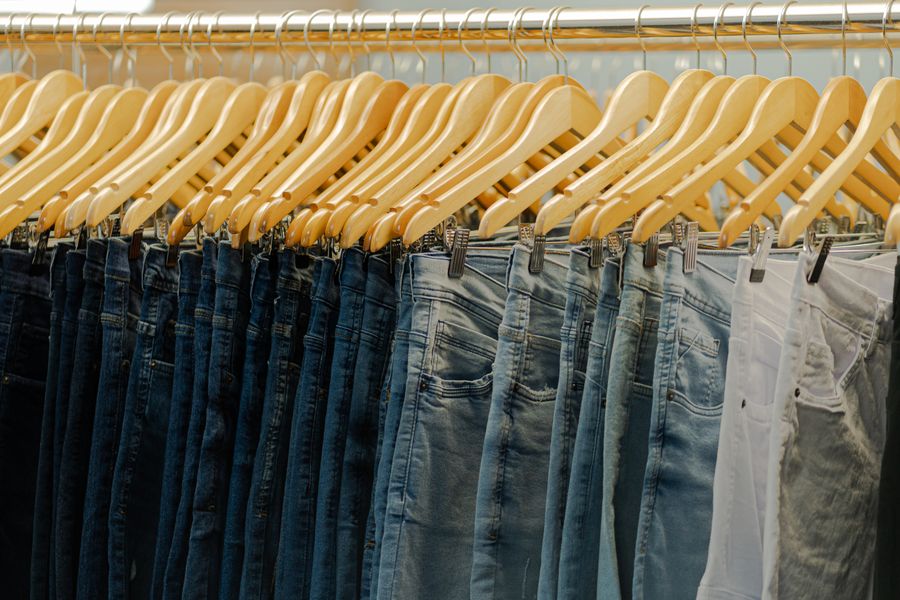
The number nobody calculates
People decide how many shirts or work trousers to own by feel, and the feel is usually wrong in one of two directions: constantly running out, or owning a great many things that rarely come round in the rotation.
The actual requirement is a simple relationship. You need enough garments to cover the days between laundry sessions, plus the time a garment spends in the wash and drying, plus whatever margin you want against a disrupted week.
Wash once a week and wear a shirt daily and the arithmetic is unforgiving: seven, plus the ones in the machine, plus a couple in reserve. Wash twice a week and the same wardrobe function is delivered by roughly half the garments.
Wearings per wash changes the whole calculation
Not everything is worn once. A wool jumper can go many wearings before it needs anything but airing. A pair of trousers can usually go several. Shirts and anything worn against skin are closer to single use, and knitwear worn directly against skin behaves like a shirt rather than like knitwear.
This is where wool earns its reputation as a practical fibre rather than a luxurious one. It resists odour, releases creases when hung, and can be worn repeatedly between washes, which reduces both the size of wardrobe you need and the number of wash cycles the garment endures.
Cotton next to skin is at the other end. It absorbs and holds moisture and body residue, and a cotton shirt worn for a full day genuinely needs washing. That is not fastidiousness, it is the fibre.
Cycle time is the constraint people forget
A garment is unavailable from the moment it comes off until it is dry, pressed if it needs pressing, and back in the wardrobe. That is often two or three days rather than the couple of hours the wash takes, and in a flat without outdoor drying it can be longer.
Anything that lengthens the cycle increases the number of garments required. Hand-washing, line drying in winter, items that must be pressed before wearing, garments that need dry cleaning — each adds days, and days translate directly into duplicates you must own.
It is worth noticing this when buying. A garment that needs special handling is not just more effort, it is quietly requiring you to own more of its kind so there is one available when the last is in the queue.
Too few and too many both cost something
Owning too few means every garment is washed constantly, and washing is what consumes clothes. A shirt in a rotation of three is worn and washed far more often than the same shirt in a rotation of eight, and it wears out proportionally faster.
Owning too many has a subtler cost. Garments that come round rarely still age in storage, still go out of date, and still occupy space and attention. And a large rotation obscures wear, so failures arrive as surprises rather than gradually.
There is a genuine middle where a garment is used enough to justify owning it and rested enough to last. Resting matters more than it sounds — wool in particular recovers its shape between wearings, and shoes need a day to dry out internally, which is the real reason for alternating pairs.
Building the rotation deliberately
Start from the laundry cycle you actually run rather than the one you intend to. Count the days between washes, count how many of each category you get through in that period, add the cycle time, then add a small margin.
Then check whether the garments in a category are actually interchangeable. Five shirts of which two are wrong for work is a rotation of three with two decorations, and this is where a rotation quietly fails while appearing to be adequate.
The same exercise explains why some wardrobes feel thin despite being large. Duplication in one category and a gap in another produces exactly that sensation, and it is a counting problem rather than a taste problem.
A note on washing less
Everything here improves if garments are worn more than once where that is reasonable. Airing a garment overnight on a broad hanger, brushing wool, spot-cleaning a small mark rather than washing the whole piece — each of these extends the wearings per wash and shrinks the wardrobe you need.
The limit is obvious and personal, and it is not a competition. Some garments and some climates and some jobs make single wearings the only sensible answer.
But for a great deal of outerwear, tailoring and knitwear, the default of washing after every use is a habit rather than a requirement, and it is the single largest source of avoidable wear in most people's clothing.
Common questions
How many shirts is the right number?
It depends entirely on your laundry frequency, but the structure is fixed: days between washes, plus the days a garment is unavailable while being washed and dried, plus a small margin. Work the number out from your own cycle rather than adopting somebody else's figure.
Is it bad to wear the same trousers several days running?
For most fabrics no, and for wool it is actively better, since the fibre recovers its shape when the garment is hung and rested. What is worth avoiding is wearing the same garment continuously without letting it air, because moisture and creases both set in.
Does alternating shoes really matter?
Yes, and for a practical reason. A shoe absorbs moisture during a day of wear, and it needs roughly a day to dry out from the inside. Wearing the same pair every day keeps the interior damp, which degrades the lining and the insole faster than the walking does.
Nikhil writes about fit, fabric, care & repair, mostly the parts other people skip and is unreasonably interested in the detail nobody else checks.