
Wardrobe
The alteration is part of the price of the garment
Clothes are sold as though the price on the label were the total, but almost nothing fits straight off the rail, and budgeting for the fitting changes what is worth buying.
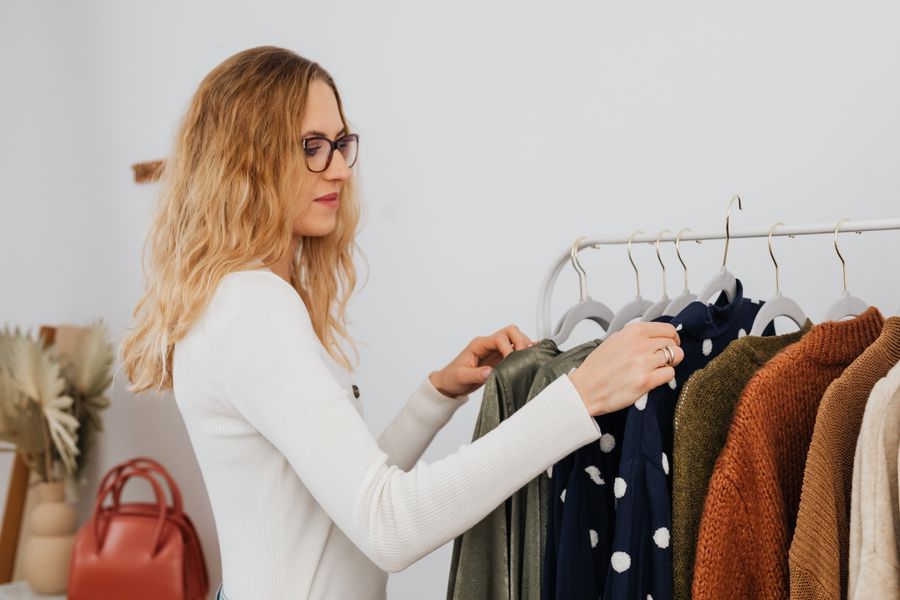
Ready-to-wear is a compromise by design
Mass-produced clothing is drafted for an average body at each size and then graded up and down. There is no body that is average in every dimension at once, so a garment that fits perfectly in every place off the rail is a coincidence rather than an expectation.
The industry does not present it this way, and most buyers absorb the mismatch as a personal problem. It is not. It is a manufacturing method with known limits, and the limits were designed in for entirely rational reasons of cost and scale.
Once that is accepted, the sensible response is to treat the purchase price and the fitting cost as one number. A garment is not really priced until you know what it will take to make it fit.
The cheap adjustments and the expensive ones
A short list of alterations costs little and transforms how a garment looks: hems on trousers and skirts, sleeve length on shirts, taking in a waist or side seams, tapering a leg, moving a button.
A second list costs considerably more because it means dismantling the garment: shoulder width, armhole depth, jacket sleeves shortened from the top, lining replacement, rebalancing a garment that hangs wrong across the back.
Knowing which list a problem falls into is the whole skill. It converts a vague sense that something is not quite right into a decision with a price attached, and it is why the same garment can be a bargain for one person and a bad buy for another.
Buy for the fixed dimensions and alter the rest
The practical rule follows directly. Buy for the parts that cannot be changed cheaply, and let the alterable parts be wrong. On a jacket that means the shoulder and the chest; on trousers it means the rise and the seat; on a shirt it means the collar and the shoulder.
The instinct to buy the size that is closest overall works against this. A garment one size up with correct shoulders is a better purchase than one that fits the body and pinches across the back, because the first can be brought in and the second cannot be let out beyond its allowance.
This also means checking the seam allowance before buying anything you intend to have let out, since the alteration is limited by cloth that already exists inside the garment and nothing can add to it.
What a fitting is worth in proportion
The proportional case is straightforward. A modest sum spent on hems and a waist adjustment changes a garment from something that hangs approximately on you to something that looks deliberate, and no increase in the purchase price achieves the same effect.
That is why fitting is the highest-value spending in clothing, and why it is worth doing on inexpensive garments too. There is a persistent idea that alterations are for expensive clothing. The opposite is closer to true: the visual gap between an ill-fitting cheap garment and a well-fitting one is enormous.
The limit is the cloth. Fitting cannot improve a thin, poorly finished fabric, and there is a point where the work costs more than the garment can return. That point is lower than people fear and higher than the marketing suggests.
Building the habit into how you shop
It helps to have a tailor before you have something to alter. Finding one when a garment urgently needs work leads to whoever is nearest, and quality varies enormously between alteration shops.
Start with something simple and low-stakes, see how the work comes back, and pay attention to whether the pressing is good, because pressing is where the difference between a competent job and a careless one shows most clearly.
Then shop with the fitting in mind. Try garments on, note what is wrong, and mentally add the cost. A number of purchases stop looking attractive at that point, which is precisely the value of doing it.
Where the arithmetic stops working
Some things are not worth altering and it is worth saying so plainly. Very cheap garments where the seams are overlocked with no allowance left; anything where the fault is the balance rather than the size; heavily patterned cloth where a seam cannot be moved without breaking the pattern.
Knitwear is generally poor territory for alteration, because cutting a knit means dealing with edges that want to unravel, and the fabric behaves differently under a machine than woven cloth does.
And there is the honest case for leaving something alone. Not everything needs to fit closely, garments cut to be loose are supposed to be loose, and a tailor tightening something that was designed with generous ease will produce a garment that looks confused rather than fitted.
Common questions
Which alterations give the biggest visible improvement?
Trouser hems and leg taper, sleeve length, and taking in through the waist and sides. All three are inexpensive and all three change the silhouette immediately. Sleeve length in particular is noticed by everyone and thought about by almost nobody.
Should I alter inexpensive clothes?
Often yes, provided the cloth is decent and the seams have some allowance. The visual gain from fixing a badly fitting cheap garment is larger than the gain from fixing an expensive one, since the expensive one probably started closer. The exception is anything with trimmed overlocked seams and nothing to work with.
How do I know if a tailor is any good?
Give a simple job first and look at the result closely: even stitching, a hem that hangs level, and pressing that is crisp without shine or flattened seams. Pressing is the most reliable tell, because it is the step that gets rushed when a shop is working at volume.
Tara has written about fit, fabric, care & repair for most of the last decade and prefers a plain explanation to a clever one.